

Establishment of Diplomatic Relations Between the Federated States of Micronesia and Nepal
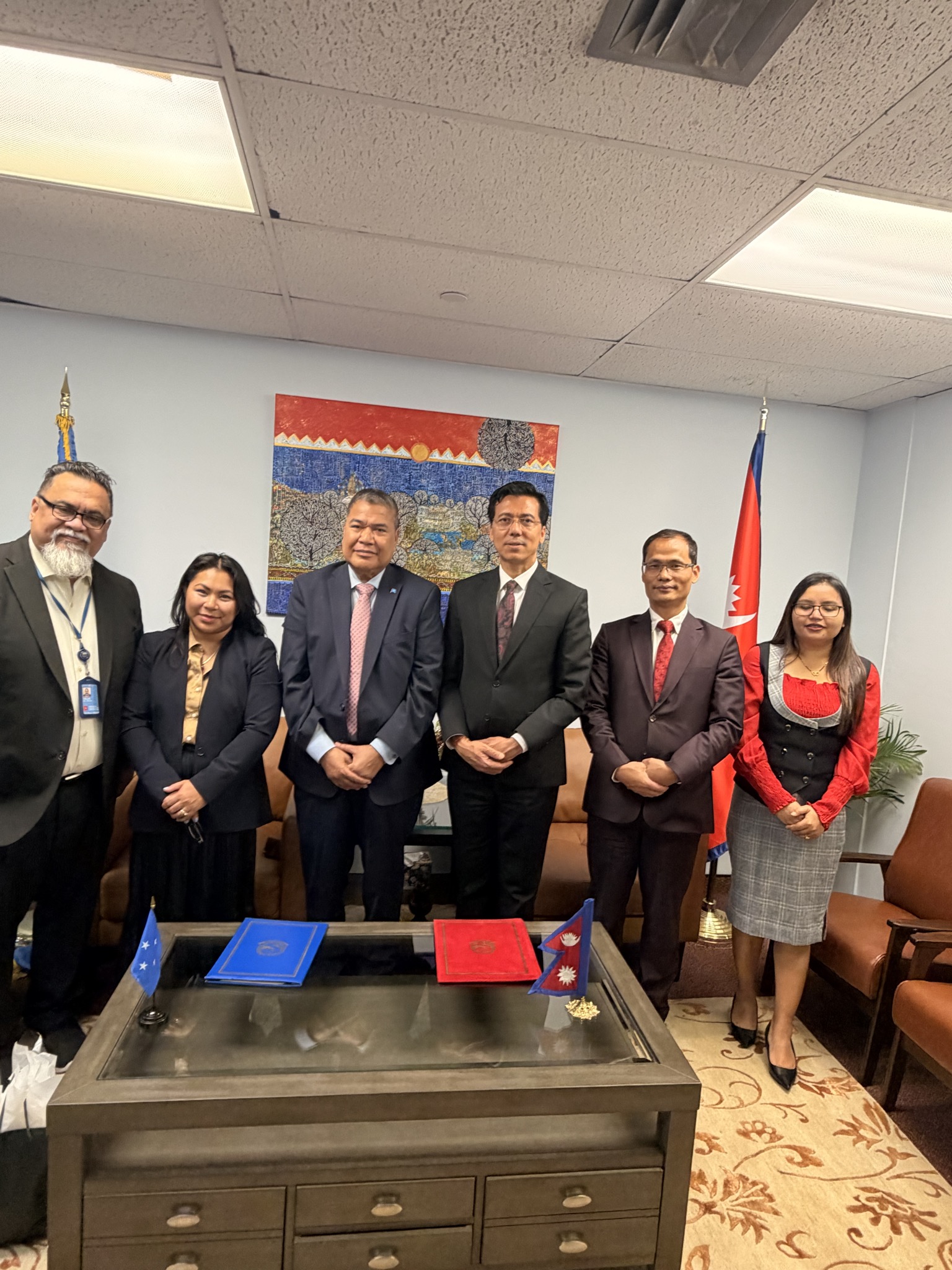
The Governments of the Federated States of Micronesia and Nepal today (September 14, 2026) formally established diplomatic relations at a signing ceremony held in New York. The Joint Communiqué was signed by H.E. Jeem Lippwe, Permanent Representative of the Federated States of Micronesia, and H.E. Lok Bahadur Thapa, Permanent Representative of Nepal, marking a significant step in strengthening cooperation between the two nations.
Both Permanent Representatives underscored the importance of diplomatic relations as a cornerstone of peaceful cooperation among sovereign states. They noted that diplomatic ties enable countries to communicate effectively, coordinate on shared priorities, and advance mutual development interestswithin the multilateral system.
The Federated States of Micronesia, recognized as a Small Island Developing State (SIDS), and Nepal, designated as a Least Developed Country (LDC), highlighted the natural solidarity between their respective groups. Both groups face structural development constraints and heightened climate vulnerabilities, representing populations most at risk from climate change despite contributing the least to global emissions.
The Permanent Representatives emphasized that SIDS and LDCs work closely in international processes, including at the UNFCCC, where they advocate for climate finance accessibility, adaptation support, and ambitious mitigation commitments. They reaffirmed that Micronesia and Nepal will continue to collaborate within these coalitions to advance shared priorities on climate resilience, sustainable development, and equitable global financing.
The two Permanent Representatives also highlighted the symbolic significance of this new relationship: Nepal is home to Mount Everest, the highest peak on Earth, while Micronesia’s maritime jurisdiction includes the Challenger Deep, the deepest part of the world’s oceans, located within the Federated States of Micronesia’s Exclusive Economic Zone (EEZ). Together, they represent the planet’s highest elevation and its deepest point, an illustration of the geographic diversity of the international community and a reminder that global challenges require cooperation across all regions, from the mountaintops to the ocean floor.



Leave a Reply
- USE OF THE VETO

- Pacific SIDS and European Partners Approve New Climate and Economic Resiliency Projects at JC19 in New York

- Question of equitable representation on and increase in the membership of the Security Council and other matters related to the Security Council

- India-UN Development Partnership Fund Annual Event
